How AI Is Replacing the Small Business Marketing Agency in 2026
Traditional marketing agencies charge $5–15k/mo retainers for work that AI can now do faster, cheaper, and often better. Here's what's changed in 2026 — and why small businesses are quietly switching.
For the last twenty years, the playbook for a small business that wanted to grow was simple: hire a marketing agency, pay a $5,000–$15,000 monthly retainer, and hope the strategist assigned to your account wasn't three clients away from burnout.
In 2026, that playbook is breaking.
Not because agencies are bad — many are excellent — but because AI marketing agents can now do the bulk of the work that used to require a team of five. Faster. Cheaper. And in most cases, more consistently.
What the traditional agency actually sells
Strip away the jargon and the quarterly reviews and a standard small-business marketing agency sells you four things:
- Creative production — ads, social posts, photography, video
- Media buying — running paid ads on Meta, Google, TikTok
- Content & copy — captions, blog posts, email
- Reporting & strategy — monthly decks, KPI reviews
In 2020, each of those required specialist humans. In 2026, every single one of them has a mature AI workflow that a competent operator can run for a fraction of the cost.
The economics have flipped
A typical $7,500/mo agency retainer translates to roughly 40 hours of senior time per month — about 2 hours a day. That's not enough hours to test enough creative, rewrite enough copy, or optimize enough ad sets to move the needle for most small businesses.
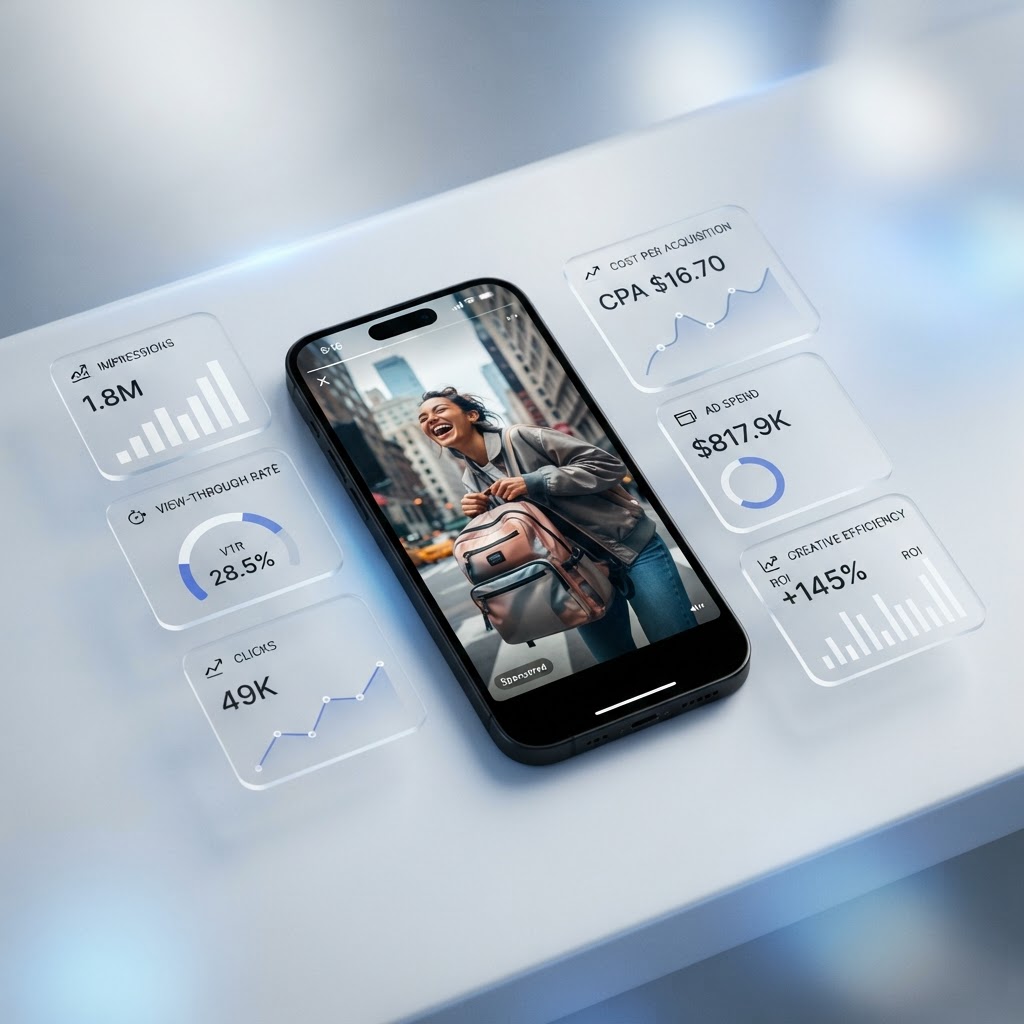
An AI marketing agent doesn't sleep. It doesn't have 12 other clients. It can spin up 20 ad variants in the time it takes a human to write one, run them all, and tell you which three won by Friday.
That's not a marginal improvement. That's a structural shift.
What AI actually does well in 2026
A few years ago, AI tools were novelty. Today they're operational infrastructure:
- Ad creative — static and short-form video produced on demand, in your brand voice
- Hyper-local SEO — citation building and content production at a scale no freelancer can match
- Inbound replies — AI voice agents answering phones 24/7 and qualifying leads before they ever hit your inbox
- Reporting — plain-English summaries of what's working, written for a non-marketer
The humans didn't disappear. They moved up the stack — into strategy, brand, and judgment calls. The commodity work got automated.
Where agencies still win
This isn't a funeral. Agencies still win when:
- The brand is complex and needs senior creative direction
- The business has regulatory or legal nuance (healthcare, finance, legal)
- There's a specific relationship-driven audience that AI can't access
For a high-end hospitality brand or an enterprise account, a great agency is still the right answer.
For the dentist, the HVAC company, the three-location restaurant group, the DTC brand doing $50k–$500k/mo in revenue? AI marketing agents are already winning on both cost and output.
The quiet switch
Most small businesses aren't firing their agencies with a press release. They're running quiet pilots — letting an AI agent handle one channel (usually paid social), watching the cost per acquisition drop 30–50%, and then gradually moving more channels over.
By the time the retainer comes up for renewal, the decision is already made.
What this means for your business
If you're running a small business in 2026, you don't need to pick sides. You need to ask a cleaner question: for every dollar I spend on marketing, is the human or the machine making the best decision with it?
In most cases, a hybrid beats either alone. A senior human for brand and strategy, plus an AI agent running creative, media, and optimization day-to-day.
That's the model Vella is built for — and it's why the agency model as we knew it is being quietly, politely replaced.